Lesson 3 – Comparing Democratic and Authoritarian Approaches: Insights from Gandhi, Mandela, and Napoleon
When we speak of history’s greatest political leaders, the spectrum between democratic and authoritarian methods often defines the legacy they leave behind. Democratic approaches prioritize inclusive decision‑making, accountability, and civil liberties, while authoritarian styles concentrate power in a single figure or tight elite, promising swift action but risking suppression of dissent. Understanding this dichotomy matters because modern leaders must choose—or blend—strategies that suit their nation’s political culture, economic pressures, and security challenges.
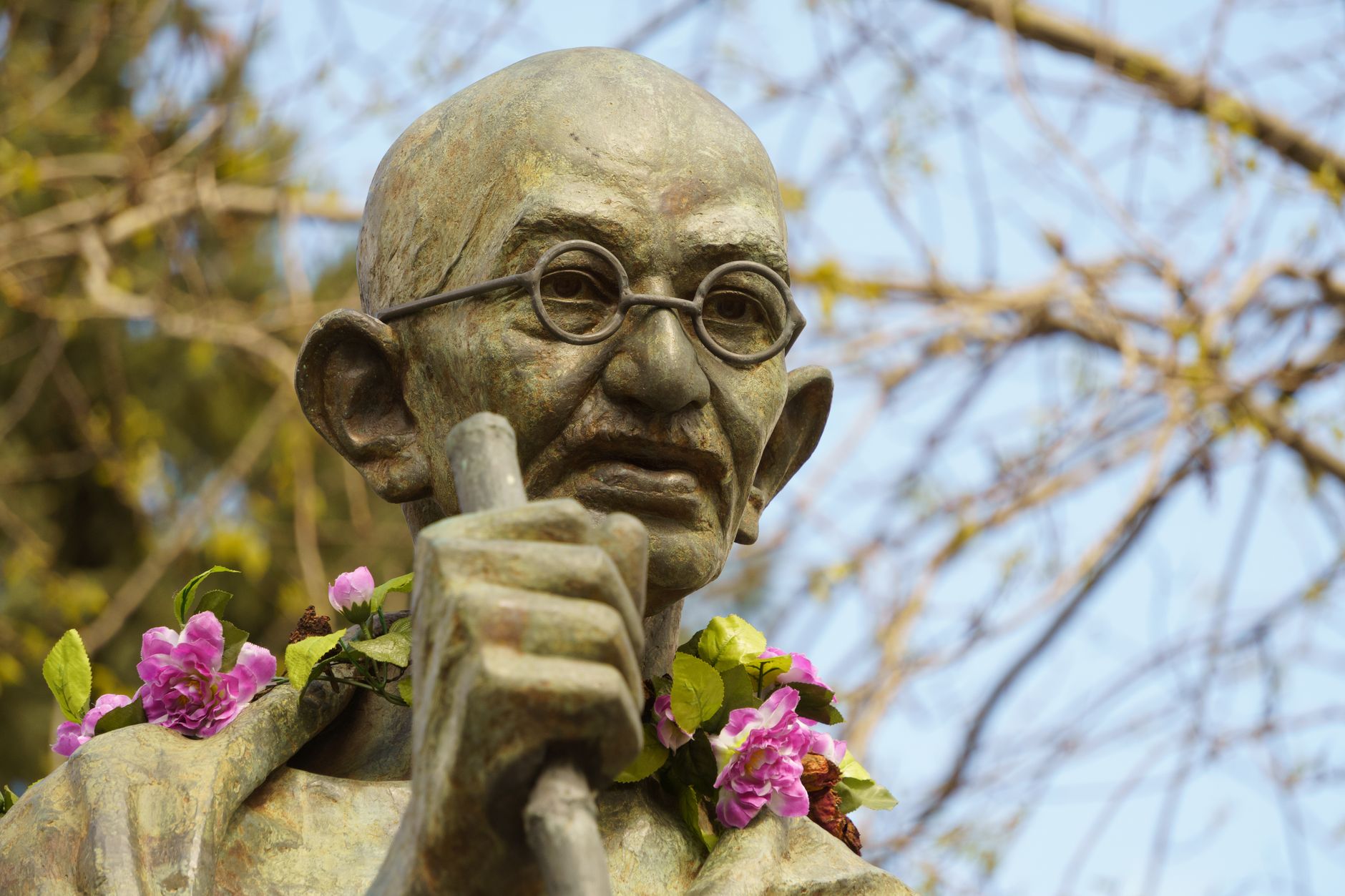
Gandhi’s leadership illustrates how a democratic ethos can be weaponized against oppression without ever wielding a rifle. He championed non‑violent civil disobedience, inviting every citizen to participate in mass movements like the Salt March, thereby turning the struggle for independence into a nationwide conversation. Practitioners of modern social activism often cite Gandhi as a template because his method demonstrates that legitimacy grows when people feel heard, even under colonial rule.
Nelson Mandela provides a contrasting yet complementary case: he emerged from an authoritarian apartheid regime and deliberately shaped a new, democratic South Africa. After 27 years of imprisonment, Mandela’s emphasis on reconciliation—exemplified by the Truth and Reconciliation Commission—showed that a former revolutionary could steer a nation toward inclusive governance while still confronting lingering institutional bias. His approach matters today for any leader navigating post‑conflict transitions, where the temptation to cling to hard‑line control can derail long‑term stability.
Additional Information
Napoleon Bonaparte, by contrast, epitomizes the authoritarian playbook, consolidating power after the French Revolution to deliver rapid legal and administrative reforms. His Napoleonic Code standardized civil law across a fragmented Europe, a concrete example of how centralized decision‑making can produce lasting institutional change. Yet, Napoleon’s relentless military campaigns also remind us that authority without checks can spiral into overextension, a cautionary note for leaders who prize speed over sustainability.
These three figures demonstrate that the effectiveness of democratic versus authoritarian tactics often hinges on context. In societies where institutional trust is low, a temporary strong‑hand approach may stabilize the system, but only if a clear pathway back to democratic norms exists. Conversely, in environments rich with civil society, democratic engagement can amplify legitimacy and reduce the need for coercive measures. Thus, history’s greatest political leaders teach us to assess the “condition X” of public trust, economic health, and external threats before selecting a leadership style.
Lesson 4 – Common Misinterpretations of Their Legacies and How to Avoid Them
Legends are easy to sculpt, but myths can distort the lessons we extract from history’s greatest political leaders. Misinterpretations arise when narratives omit nuance, over‑simplify complex decisions, or elevate a single figure to mythic status without acknowledging the collective forces at play. Recognizing these distortions matters because policy makers who base strategies on a skewed past risk repeating past mistakes or chasing unattainable ideals.
A prevalent misreading of Winston Churchill paints him solely as the indomitable wartime hero, glossing over his controversial views on empire and race. While his oratory galvanized Britain during WWII, practitioners who ignore his imperialist stance may inadvertently endorse policies that disregard modern multicultural realities. Balanced scholarship therefore urges us to celebrate his crisis leadership while critiquing his broader worldview.
Similarly, many famous revolutionary leaders—such as Che Guevara—are romanticized as symbols of pure idealism, sidestepping the violent tactics they endorsed. Che’s role in guerrilla warfare, for instance, is often sanitized in popular culture, yet the reality includes harsh reprisals against civilian populations. When contemporary activists invoke his image without grappling with these darker facets, they risk endorsing strategies that conflict with international humanitarian norms.
Another common error involves over‑glorifying Napoleon as a pure modernizer while downplaying the human cost of his campaigns. His administrative reforms were indeed groundbreaking, but the relentless battles that followed caused massive loss of life across Europe. Leaders who cherry‑pick Napoleon’s legal achievements without accounting for the accompanying devastation may adopt reforms without preparing for the societal upheaval they can trigger.
To sidestep these pitfalls, consider a concise checklist when studying any political figure:
- Identify the socio‑political conditions that shaped their decisions.
- Separate policy outcomes from the leader’s personal beliefs.
- Cross‑reference multiple sources, especially those from marginalized perspectives.
- Assess both short‑term successes and long‑term repercussions.
Applying this framework keeps us from falling into the trap of hero worship and ensures that the wisdom we draw from history’s greatest political leaders remains rooted in reality. By questioning narratives and embracing complexity, modern leaders can adapt timeless strategies without inheriting outdated biases.
Frequently Asked Questions about History’s Greatest Political Leaders
Practical Takeaways for Modern Leaders
After walking through crisis management, visionary reforms, and the nuances of democratic versus authoritarian tactics, it’s time to translate the lessons of history’s greatest political leaders into concrete actions you can use today. Below are three immediately‑implementable steps, each anchored in a real‑world scenario that mirrors the challenges faced by contemporary executives, elected officials, or community organizers.
- Build a “Rapid‑Response Playbook.”strong> Winston Churchill’s habit of writing nightly bulletins for his war cabinet kept his team aligned during the Blitz. Replicate this by designating a small cross‑functional team that drafts a concise situation‑report each morning, outlines key decisions, and distributes it within 24 hours. The habit forces leaders to confront facts, prioritize actions, and avoid paralysis when a crisis erupts.
- Conduct a “Vision‑Audit” each fiscal year. Franklin D. Roosevelt’s “Four‑Freedoms” speech gave the public a clear, aspirational framework that guided New Deal legislation. In practice, sit down with senior staff, write down three bold outcomes you want your organization to achieve, and map each to specific policy or product initiatives. Review progress quarterly and adjust tactics, ensuring the vision stays alive like a North Star rather than a one‑off slogan.
- Apply a “Stakeholder‑Impact Matrix” before any major reform. Deng Xiaoping’s economic opening was successful because he first identified which groups would benefit and which might resist. Create a simple two‑axis chart: impact (high/low) versus resistance (high/low). For every proposed change, plot it on the matrix and develop a mitigation plan for high‑impact, high‑resistance items. This prevents surprise backlash and builds the political capital needed to push through tough decisions.
Implementing these three tools—daily briefings, a vision audit, and an impact matrix—turns historic wisdom into daily habits. When you see them in action, you’ll notice a smoother decision‑making flow, clearer communication, and a stronger ability to balance bold reforms with the human realities that both Gandhi and Napoleon grappled with.
Frequently Asked Questions about history’s greatest political leaders
What is meant by “history’s greatest political leaders”?
The phrase refers to individuals whose political actions reshaped societies, set enduring precedents, or introduced reforms that still influence contemporary governance. Examples include Winston Churchill, Franklin D. Roosevelt, and Deng Xiaoping, whose policies are studied for their lasting impact.
Also Read: Which Famous Economic Thinkers Best Guide Your Business Strategy?
How do I apply crisis‑management tactics from Winston Churchill to my business?
Start by creating a concise daily briefing that outlines key threats, decisions made, and next steps—mirroring Churchill’s wartime bulletins. Share it with your leadership team within 24 hours to maintain alignment and speed up response times.
Is it better to model leadership after democratic reformers like Franklin D. Roosevelt or authoritarian strategists like Napoleon?
Both styles offer valuable lessons, but the best fit depends on your organization’s culture and goals. Democratic reformers excel at building consensus and sustainable change, while authoritarian approaches can deliver rapid transformation when decisive action is essential.
How can I avoid common misinterpretations when studying history’s greatest political leaders?
Use a checklist: identify the socio‑political context, separate outcomes from personal beliefs, cross‑reference diverse sources, and evaluate both short‑term gains and long‑term repercussions. This method reduces bias and uncovers nuanced insights.
Why do modern leaders still study figures like Gandhi and Mandela?
Gandhi’s emphasis on non‑violent civil disobedience and Mandela’s focus on reconciliation provide timeless strategies for conflict resolution and nation‑building. Their approaches demonstrate how moral authority can amplify political influence without resorting to force.
How do visionary reforms from Franklin D. Roosevelt translate to today’s tech‑driven economies?
Roosevelt’s New Deal paired bold goals with concrete programs. Modern leaders can emulate this by setting clear, ambitious targets (e.g., carbon‑neutral operations) and backing them with specific initiatives, such as renewable‑energy investments or workforce retraining.
Is studying multiple political systems more beneficial than focusing on a single leader?
Yes. Comparing democratic, authoritarian, and hybrid models—like those of Gandhi, Napoleon, and Deng—exposes strengths and pitfalls across contexts, giving leaders a richer toolkit to adapt strategies to varying circumstances.
Conclusion
History’s greatest political leaders did not rely on luck; they cultivated habits, frameworks, and a relentless curiosity about the human condition. By extracting their playbooks—whether it’s Churchill’s rapid briefings, Roosevelt’s vision‑driven reforms, or Deng’s stakeholder‑impact analysis—you gain a pragmatic edge that can reshape today’s leadership landscape.
Take the next step: choose one of the three actionable tools above, pilot it in your organization this month, and measure its effect on decision speed, team alignment, and stakeholder satisfaction. The real power of historical insight lies not in reverence but in execution. When you translate timeless wisdom into daily practice, you join a lineage of leaders who turned ideas into lasting change.
Common Mistakes to Avoid
When you try to imitate history’s greatest political leaders, you often fall into familiar traps that undermine the very lessons you hope to leverage. Below are three frequent mistakes, why they derail progress, and what you can do instead.
- Mistake 1: Treating a leader’s success as a one‑size‑fits‑all formula.
Why it’s wrong: Leaders such as Winston Churchill or Mahatma Gandhi operated within distinct cultural, economic, and geopolitical contexts. Copy‑pasting their tactics without adjusting for today’s variables can produce policies that feel out‑of‑touch or even counterproductive.
What to do instead: Conduct a “context‑fit audit.” Identify the core principle behind the historic action (e.g., Churchill’s rapid briefing cadence) and then map it onto your organization’s decision‑making speed, information flow, and stakeholder expectations. Adjust the cadence to match your team’s capacity – perhaps a twice‑daily stand‑up instead of a full‑blown war‑room.
- Mistake 2: Ignoring the ethical dimension of a leader’s tactics.
Why it’s wrong: Some celebrated figures achieved results through coercive or exclusionary means (think of Napoleon’s aggressive expansion). Replicating such tactics can erode trust, damage brand reputation, and invite legal risk.
What to do instead: Pair every strategic move with a “values impact check.” Ask: “Does this step align with our stated commitment to transparency and inclusivity?” If the answer is uncertain, redesign the approach—perhaps substituting hard‑line negotiations with collaborative problem‑solving workshops.
- Mistake 3: Over‑relying on charismatic personality instead of building sustainable systems.
Why it’s wrong: Charisma can rally people temporarily, but history shows that once the charismatic figure exits, many movements crumble (e.g., the post‑Mao vacuum). A leader who leans on personal magnetism without institutionalizing processes leaves a fragile legacy.
What to do instead: Institutionalize the habits you admire. If you value Deng Xiaoping’s stakeholder‑impact analysis, embed a simple “impact matrix” into every project charter. This creates a repeatable framework that survives personnel changes.
- Mistake 4: Assuming that “greatness” means flawless decision‑making.
Why it’s wrong: Even the most celebrated statesmen made costly errors—Churchill’s Gallipoli miscalculations or Roosevelt’s early internment policies. Believing that greatness equates to perfection blocks learning from failures.
What to do instead: Adopt a “post‑mortem culture.” After each major initiative, document what worked, what didn’t, and why. Use this repository to refine your own playbook, turning historic missteps into personal growth opportunities.
Advanced Tips From Practitioners
Practitioners who have successfully translated the wisdom of history’s greatest political leaders into modern enterprises share nuanced tactics that go beyond surface‑level imitation. The following three tips are grounded in field experience and can be rolled out within a single quarter.
- Leverage “Strategic Framing Sessions” to align narratives.
In diplomatic history, leaders like Franklin D. Roosevelt framed the Great Depression as a “new deal” to rally public support. Modern CEOs can host a 90‑minute framing workshop with senior managers, asking each participant to articulate the organization’s purpose in a single, emotionally resonant sentence. The outcome—a shared narrative—sharpens messaging, accelerates buy‑in, and mirrors the rally‑cry technique used by historic statesmen.
- Implement “Shadow‑Decision Boards” for rapid scenario testing.
Napoleon famously used a cadre of marshals to simulate battle outcomes before committing troops. In a corporate setting, create a small “shadow board” composed of cross‑functional experts who run parallel “what‑if” simulations whenever a high‑stakes decision arises. Their rapid feedback loop reduces the decision‑lag that often plagues large organizations, while also providing a safety net similar to a military war‑game.
- Adopt a “Stakeholder Pulse Metric” inspired by Deng’s data‑driven reforms.
Deng Xiaoping pioneered the practice of collecting grassroots data before launching economic reforms. Today, set up a quarterly pulse survey targeting customers, suppliers, and employees. Convert the survey results into a simple index (e.g., 0‑100) and tie quarterly targets to improvements in that index. This habit embeds a continuous feedback mechanism that keeps leadership attuned to real‑world impact, not just internal KPIs.
- Use “Historical Counter‑Mapping” to anticipate resistance.
Leaders such as Gandhi employed “sat yagraha” after mapping the British power structure to identify weak points. For product launches, map the ecosystem of competitors, regulators, and advocacy groups. Highlight where each entity’s interests intersect with your initiative, then craft targeted engagement plans. This proactive mapping reduces surprise push‑backs and mirrors the strategic foresight of seasoned political figures.
By avoiding the common pitfalls listed above and integrating these practitioner‑level tactics, you transform admiration for history’s greatest political leaders into a concrete, results‑driven playbook. Start with one mistake and one advanced tip today; track the impact for a month, then iterate. The blend of careful correction and sophisticated execution is what separates fleeting inspiration from lasting leadership excellence.